Tenant Isolation Architecture Patterns in Kubernetes
Choose the isolation boundary that matches your tenants' trust level and compliance needs.
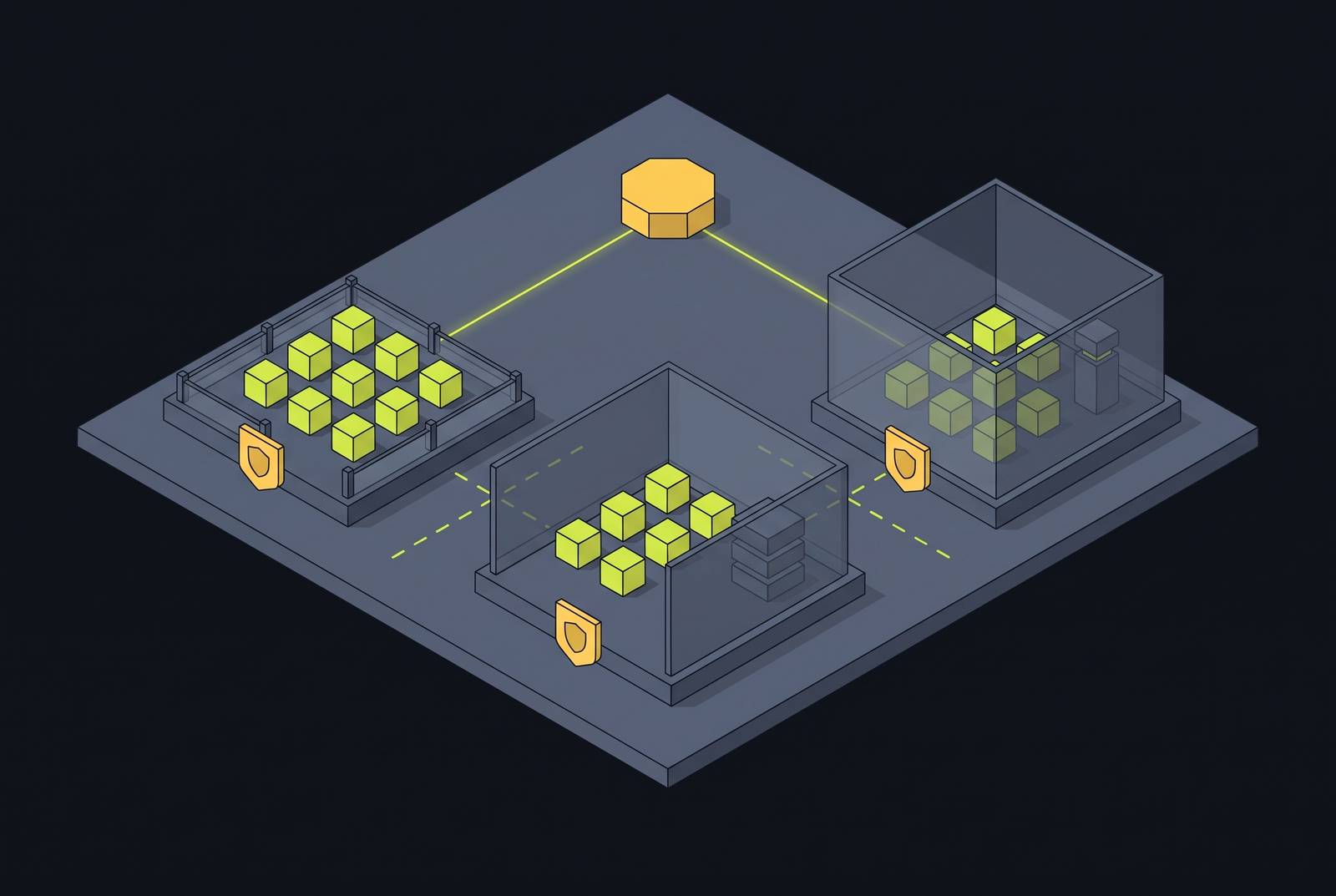
Kubernetes tenant isolation comes down to choosing the least complex boundary that meets each tenant’s security and compliance needs. Namespaces separate administration, virtual clusters separate control planes, and cluster-per-tenant separates Kubernetes environments. A PaaS running in your own cloud account can reduce the work of operating those boundaries, but account ownership alone does not establish tenant isolation or data sovereignty.
Why Kubernetes has no built-in multi-tenancy and what that forces teams to decide
Kubernetes has tools for sharing infrastructure, but teams must set up the separation between those who use it. Running several teams, projects, or customers on one cluster therefore creates an isolation problem that the platform team must solve. A namespace alone does not solve it. The Kubernetes documentation describes isolation as a spectrum, making the boundary an architectural choice.
That choice spans two distinct planes. The control plane determines who can read and change API objects, while the data plane determines what workloads can do and reach at runtime. Securing one leaves the other exposed. Namespace-based tenancy, virtual clusters, and cluster-per-tenant address this split differently, with different demands on the team operating them.
What namespace-based tenancy actually enforces and where its boundaries end
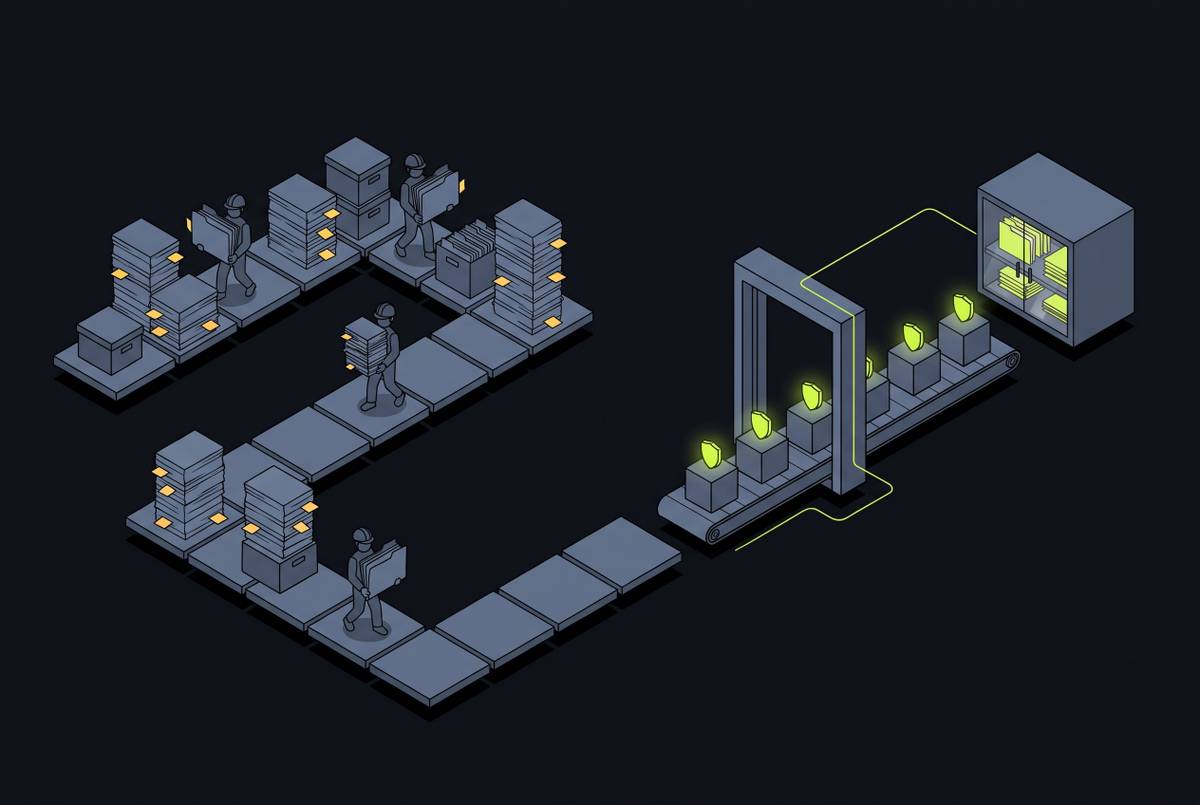
Namespaces provide an administrative boundary, which becomes useful isolation only when other controls reinforce it. RBAC limits access, ResourceQuotas constrain resource use, and NetworkPolicies restrict pod-to-pod traffic. Roles and RoleBindings let a development team work inside its namespace without receiving cluster-wide permissions. Binding access to groups instead of individuals makes it possible to audit who owns each tenant. Network separation, however, is not automatic by default.
Without NetworkPolicies, every pod can reach every other pod regardless of namespace. That makes network policy essential in a shared environment, but it does not remove the shared control plane or its failure domains. Object floods without the right quotas, or too many watch requests, can slow the API server for everyone.
Custom Resource Definitions, Storage Classes, and admission webhooks sit outside namespace boundaries, so tenants cannot each control their own conflicting definitions of the same CRD. A misconfigured webhook can affect the entire cluster. Namespaces still work for trusted internal teams that have similar SLOs, no regulated data, and the same platform policies. When those assumptions break, the next question is which shared components need to become separate.
How policy engines extend namespace isolation — and how they can break it
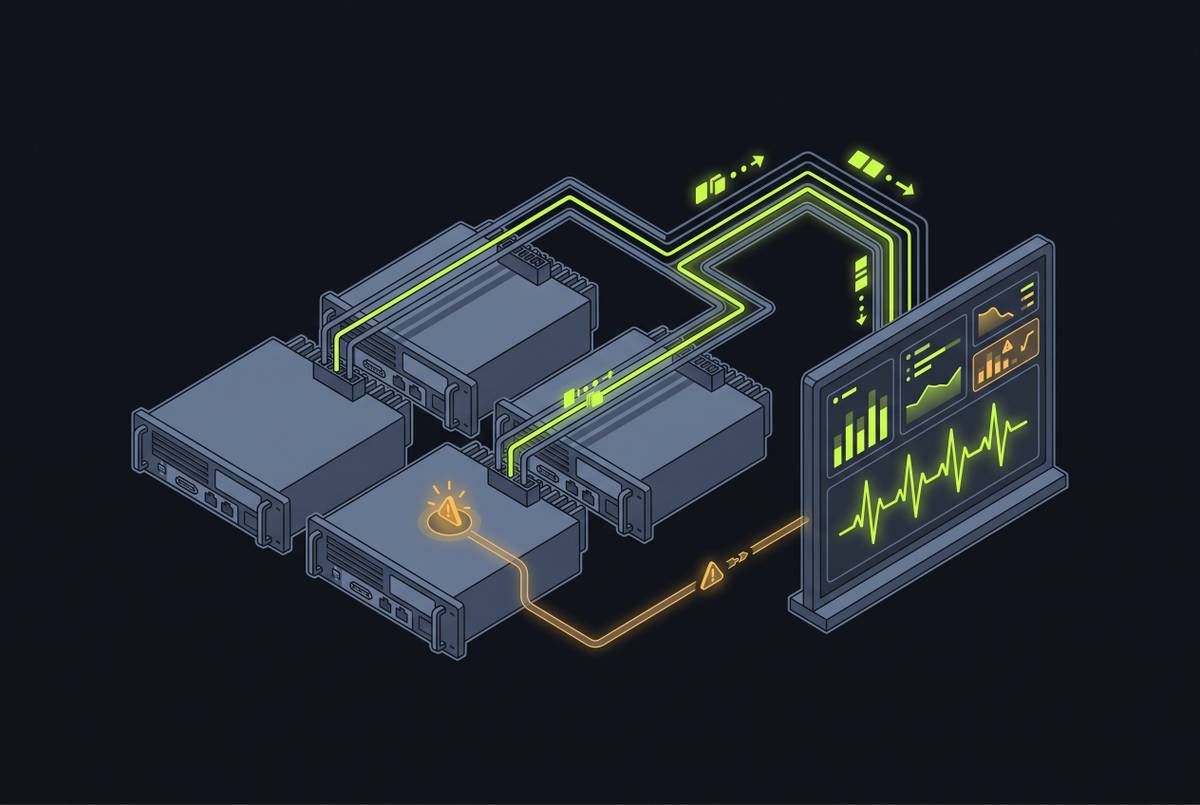
Admission controls make namespaces stronger by checking requests before resources enter the cluster. Kyverno, OPA Gatekeeper, and Validating Admission Policies work at this boundary. Falco detects activity after containers start, while KubeArmor and Tetragon provide enforcement. Sigstore Policy Controller and Trivy Operator address image and supply-chain controls, while Kubescape, kube-bench, and Polaris evaluate posture and Checkov scans infrastructure code before deployment.
GitOps makes it easier to manage those policies the same way each time. Argo CD can sync versioned policies into the cluster, where Kyverno enforces them at admission time regardless of how a resource was created. That separates the policy’s delivery from its enforcement. It also puts considerable trust in the enforcing component.
CVE-2026-100706, disclosed September 26, 2026, shows the consequence of that trust. The vulnerability affects Kyverno versions before 1.19.1 and allows users with limited namespace permissions to escalate privileges, potentially reaching cluster-administrator access. Its CVSS score is 9.9, and version 1.19.1 addressed the problem. The enforcer can become the exploit path. Defense in depth requires structural boundaries that do not depend on one policy component staying secure.
What virtual clusters actually change about the isolation boundary
With virtual clusters, each tenant has its own API server, controller manager, scheduler, and backing data store. These control-plane components run as pods on a shared host cluster. Workloads interact with a real, conformant Kubernetes cluster. Tenants talk to their own API server rather than directly sharing the host cluster’s API server, removing a category of cross-tenant privilege-escalation paths associated with that shared interface.
This separation gives tenants independent CRDs, admission webhooks, and audit logs. One tenant’s misconfigured webhook no longer governs another tenant’s resources. Kubernetes versions and upgrade schedules can also differ. That freedom creates work for the platform team, which must track more version combinations than a single shared release requires.
Tenants may still share nodes, and resource contention remains possible unless scheduling and capacity are managed deliberately. Virtual clusters therefore work for teams that need separate control planes but can share physical nodes. Multi-team SaaS platforms, development and staging fleets, and organizations reducing cluster sprawl fit that model when their runtime risks allow it.
The operator pattern that mirrors the isolation spectrum inside a single binary
A shared, cluster-scoped operator uses one pod, one leader lease, and one set of RBAC rules to watch all tenants. It is cheap to operate but offers the weakest separation. This pattern works for tenants that trust each other. Its shared identity and execution environment make the operator another boundary to consider.
In the hybrid pattern, control loops are separate but still share pods. One binary runs per-namespace loops with per-namespace leader leases, so a failure in one tenant’s loop does not delay the others, while identity isolation remains incomplete. Controller-runtime supplies the lease mechanics, making this a practical middle ground for tenants that can share a pod but need independent progress.
Operator-per-tenant goes further by assigning each tenant its own deployment, RBAC, and resource limits. It works for untrusted or regulated tenants and when billing needs to be separate. The cost rises with the deployment count. More isolation means more pods and more upgrade orchestration, repeating the cluster-level tradeoff between trust, blast radius, and operating budget.
Why GPU workloads demand isolation controls that Kubernetes cannot provide on its own
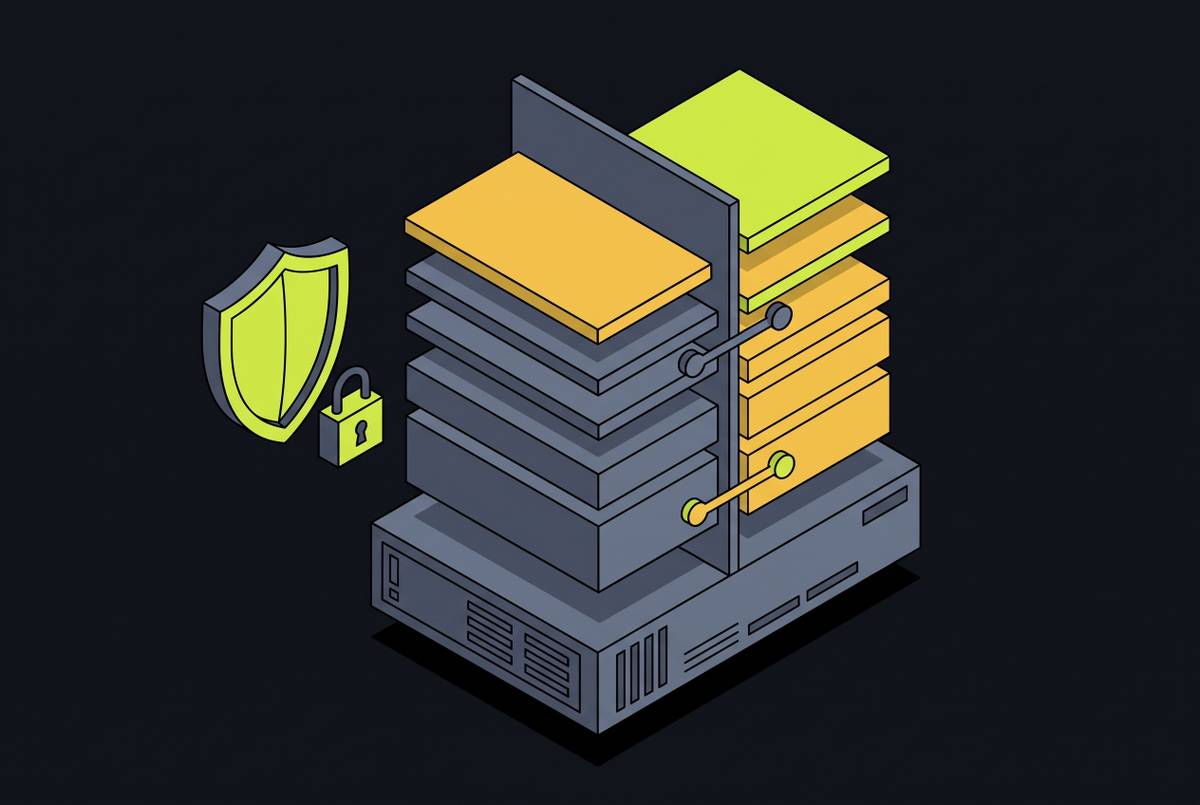
GPU sharing exposes a boundary that Kubernetes objects cannot enforce. Without hardware-enforced memory isolation, a previous tenant’s model weights can remain in VRAM and become accessible to a later workload on the same GPU. Software-only time-slicing does not prevent that exposure. Neither a namespace nor a separate API server partitions GPU memory.
NVIDIA MIG, or Multi-Instance GPU, addresses this boundary on supported newer-generation GPUs. MIG partitions A100 and H100 GPUs into up to seven instances with dedicated compute and hardware-enforced memory and cache isolation. This reduces cross-tenant memory-snooping risk compared with time-slicing. Exclusive GPU access gives the strongest separation but the lowest aggregate utilization, while MIG allows isolated sharing.
Hardware partitioning still needs a platform around it. Offering GPU compute to multiple internal teams or paying customers requires tenant isolation, self-service provisioning, scheduling, and cost controls. Building those capabilities is an engineering investment. For teams that only need compute for their own AI workloads, consuming it from a hyperscaler is faster. A PaaS that natively handles GPU scheduling and isolation inside the team’s own cloud account can instead move that implementation work out of the application team’s backlog.
How compliance requirements — SOC 2, HIPAA, and data sovereignty — translate into isolation pattern choices
Compliance reaches below the namespace and beyond workload placement. A cloud vendor’s SOC 2 Type II report is not proof of GPU isolation or workload-level cross-tenant data separation. The scope of the assurance is decisive. A regulated AI system must account for control-plane access, GPU memory, audit evidence, and the location of infrastructure operations rather than treating the vendor’s certification as coverage for the whole application.
HIPAA training workloads expose the connection between hardware risk and regulated data. Gradients computed during backpropagation can leak PHI through inter-pod communication during all-reduce operations, and gradient inversion attacks can reconstruct training data even when transport uses mTLS. Encryption in transit does not settle that risk. Data minimization and cryptographic isolation remain necessary, so shared-GPU designs cannot treat Kubernetes separation or MIG alone as a complete compliance answer.
Sovereignty also depends on where administrative power resides. Jurisdictional containment must cover every component that can read tenant data, including the control plane. Other requirements include the ability to rebuild and audit without vendor dependency, control over keys and etcd contents, and portability when jurisdiction or provider changes. A shared control plane centralizes authority, and even virtual clusters may be insufficient if their API servers or underlying operations fall outside the required jurisdiction.
SOC 2 Type II needs an evidence trail of at least three months, and the body that sets the standard recommends six months as best practice. The audit phase can therefore outlast the infrastructure build. Built-in compliance capabilities can reduce engineering work, but they do not turn the required evidence period into an instant configuration choice.
When cluster-per-tenant is the correct answer and what it actually costs to operate
With cluster-per-tenant, each tenant has its own Kubernetes cluster. Each tenant gets a separate control plane, etcd store, upgrade cycle, audit logs, and admission webhooks. It provides the strongest of the three Kubernetes isolation patterns. That makes it appropriate for untrusted external customers, jurisdictional requirements that extend to the API server, and zero-trust designs that reject cross-tenant control-plane sharing.
Separate clusters also accommodate materially different security postures and compliance regimes. Different Kubernetes versions can be a reason to use them too, though virtual clusters already let tenants run their own versions when they can share infrastructure. The distinction is the required failure boundary. Cluster-per-tenant does not replace the GPU memory controls needed when hardware is shared.
The cost begins before application workloads are running. EKS charges a fixed control-plane amount per cluster per month, so that expense grows linearly with tenant count. Every cluster also needs upgrades, CVE patching, policy application, and observability. At dozens of clusters, maintaining those parallel environments consumes engineering time that could otherwise go toward product work.
Teams should review that cost when they added separate clusters as they grew, without a clear requirement for each one. A cluster per team, environment, or product may encode historical ownership. Consolidation can then be the better operating model. Using fewer production clusters grouped by domain, with virtual clusters or namespaces where they fit, can cut costs and make it easier to keep the same controls in place. The security benefit depends on uniform enforcement.
A decision framework for selecting the right isolation pattern given actual requirements
Tenants may be internal teams with similar SLOs or distinct organizations with no mutual trust. Trusted internal teams can begin with namespaces reinforced by RBAC, NetworkPolicies, ResourceQuotas, and a maintained admission stack. Untrusted tenants need at least separate control planes. That narrows the options before cost enters the discussion.
A broken deployment, another customer’s data, and a regulated dataset with legal exposure demand different boundaries. CRD conflicts and webhook spillover point toward virtual clusters, while unacceptable cross-tenant control-plane sharing points toward separate clusters. Jurisdictional containment may settle the choice outright. GPU workloads add a hardware requirement at every tier rather than creating a reason to skip the Kubernetes decision.
A sophisticated isolation model loses its value when an overextended team cannot patch it or apply policy uniformly. Virtual clusters fit control-plane independence with acceptable node sharing, while separate clusters fit requirements that reject that shared foundation. The spectrum maps requirements to isolation patterns independently of maturity.
For a team evaluating a PaaS that deploys into its own cloud provider account, the same tests apply to the platform’s operating model. The relevant criteria are where control planes run, who can access tenant data, how policies and CVE patches are maintained, and which GPU isolation and compliance capabilities are built in. Deployment location is only the first filter. A platform can make an otherwise costly pattern practical, but the deciding boundary remains the least complex one that satisfies the tenant’s actual risk and compliance requirements.