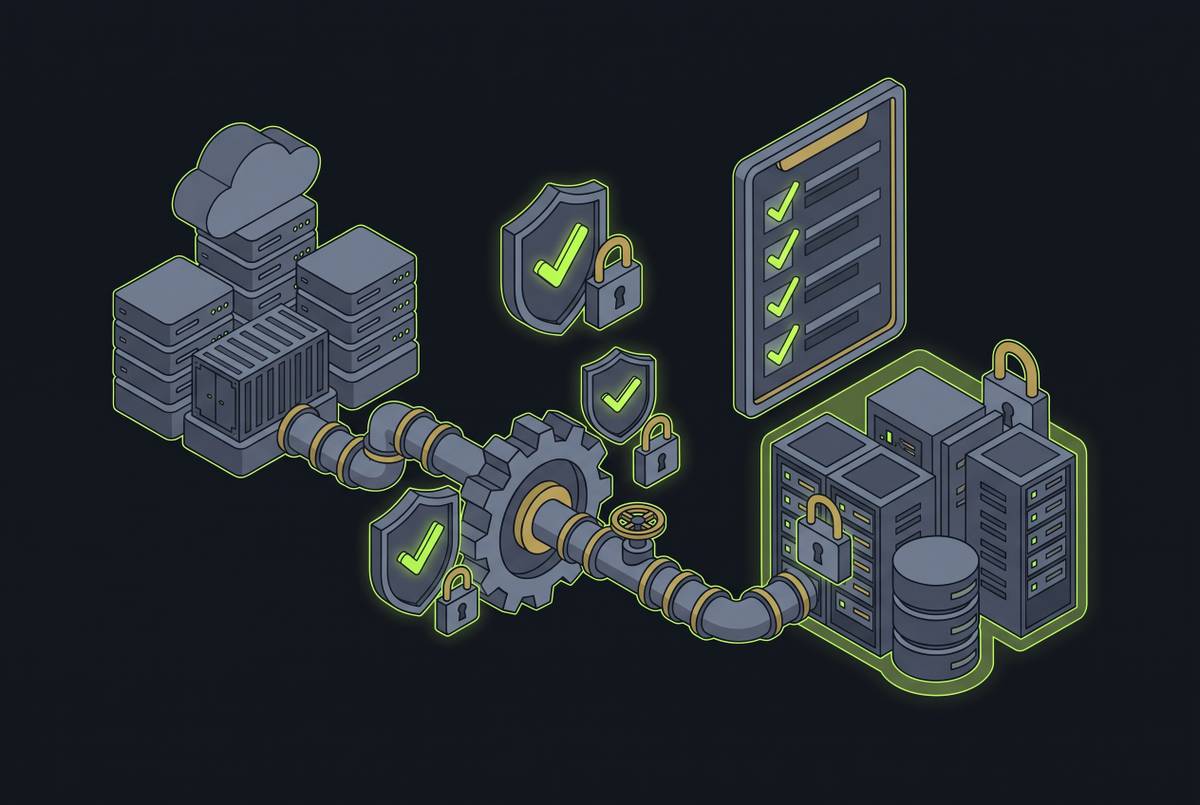
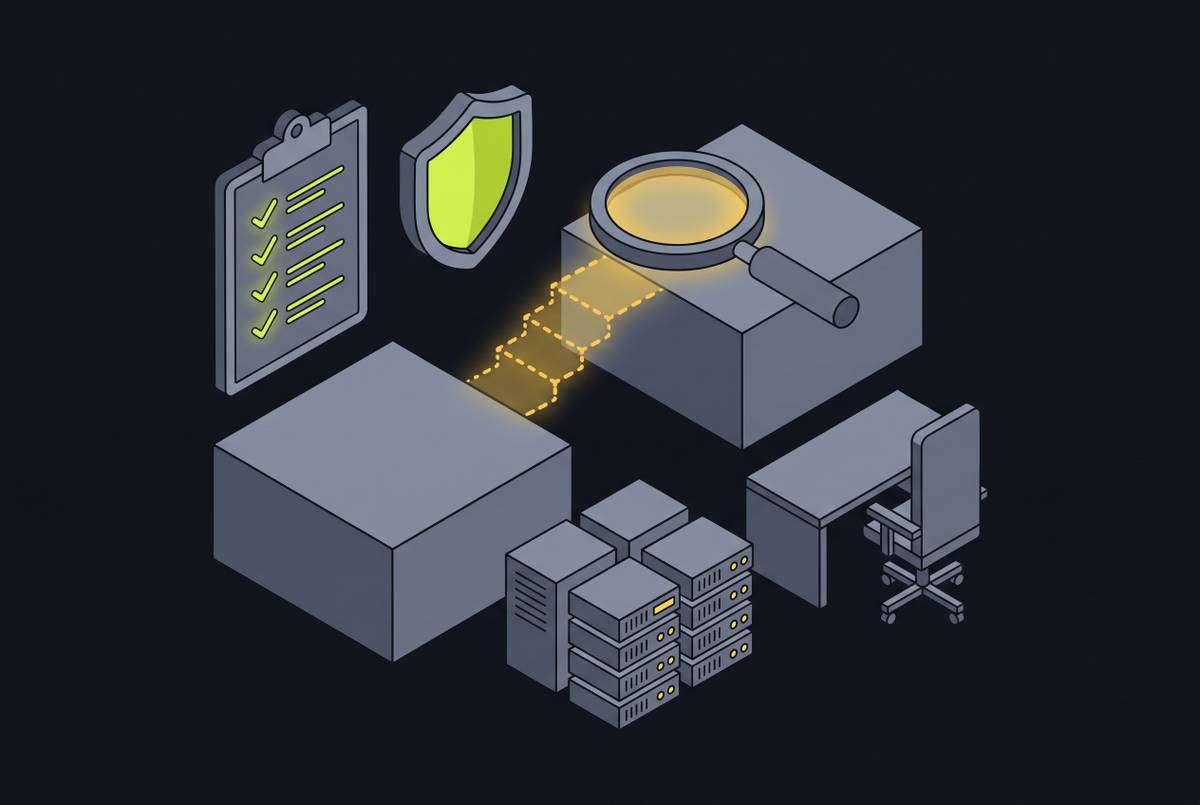
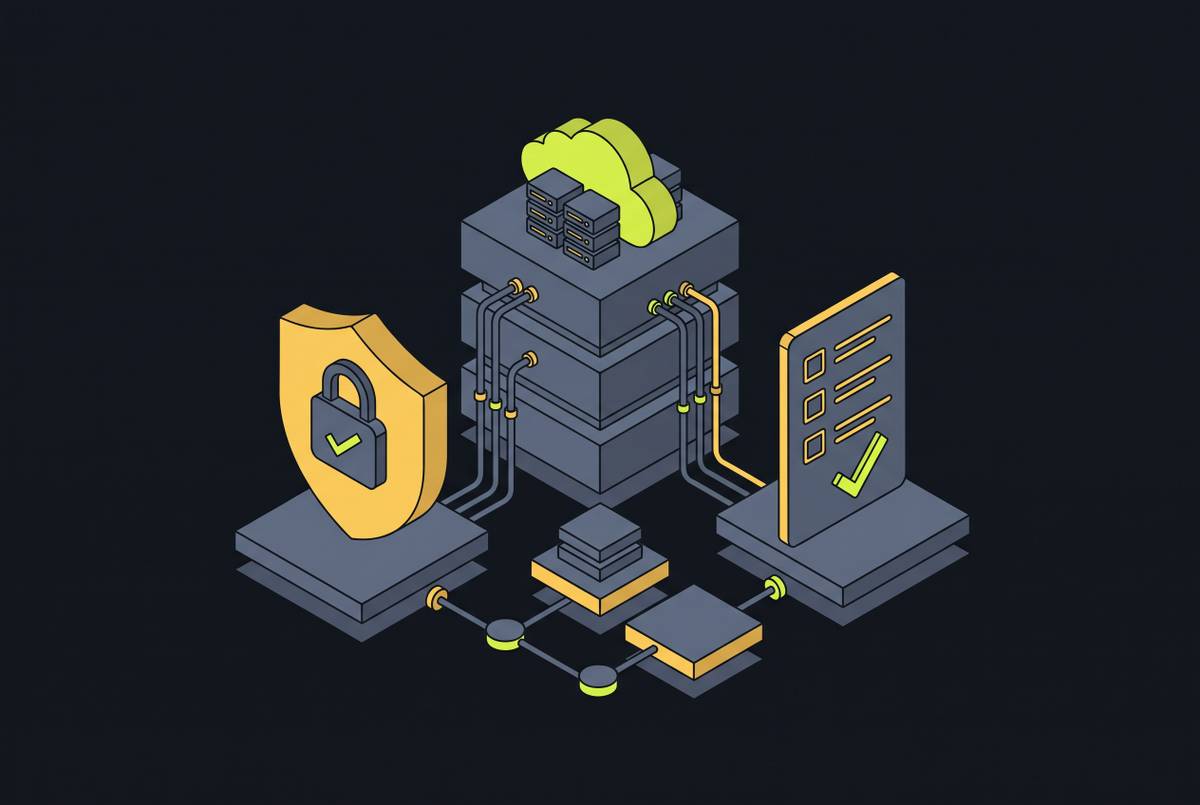
Automated CVE Patching Pipelines for Production Clusters
Automation closes the exploitation window, but humans must still decide what gets patched.
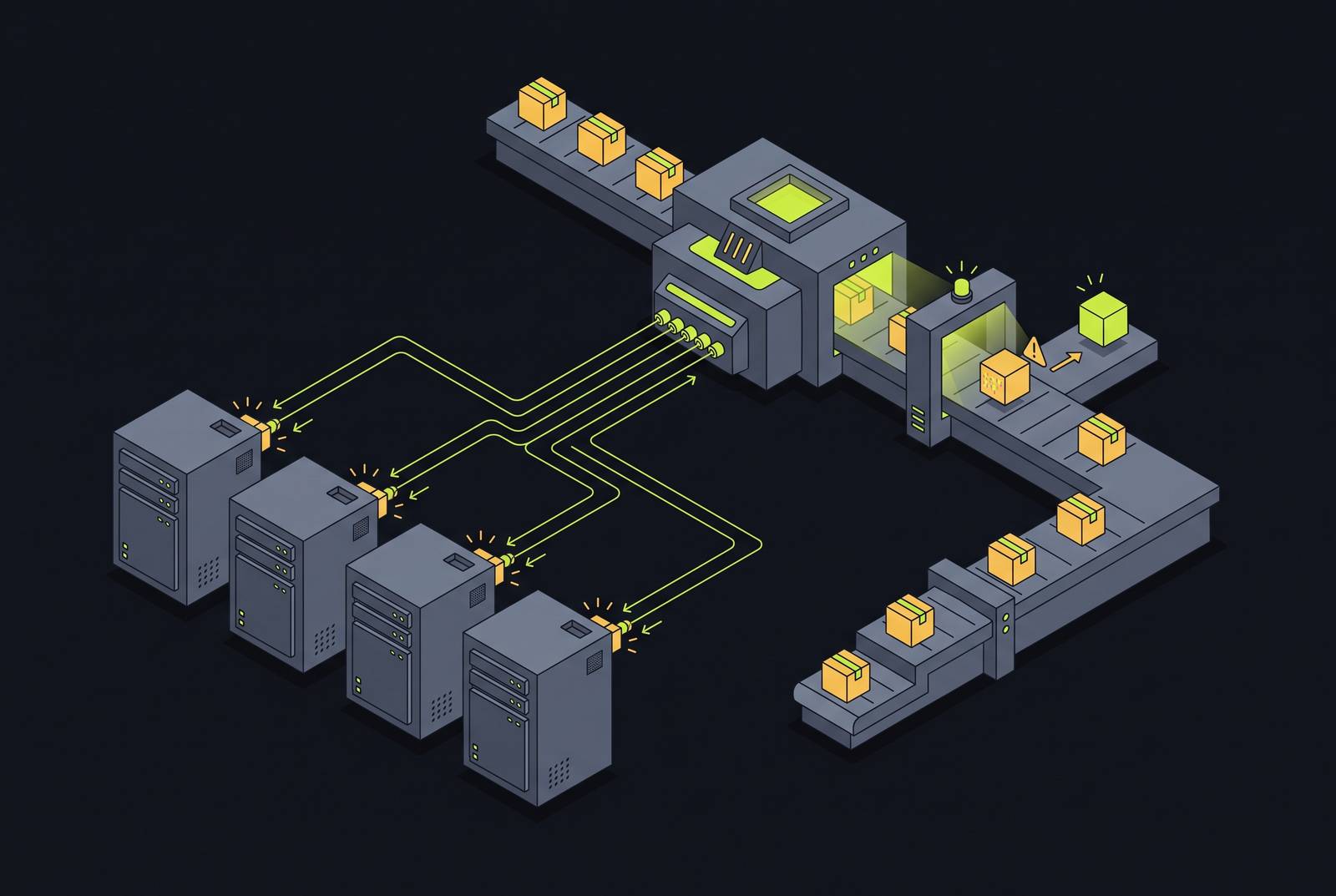
Automated CVE patching pipelines are now the least that production clusters need to stay secure because exploitation moves faster than scheduled maintenance. For startups pursuing SOC 2 and HIPAA readiness on AWS or GCP, the same pipeline can automate remediation and produce audit evidence, but it cannot replace human risk decisions or deliver compliance by itself.
Why the traditional patch cycle can no longer close the exploitation window
A scanner finds a vulnerability, an analyst creates a ticket, and operations schedules the work for a maintenance window. That process takes weeks to months, while exploitation now moves in hours to days. LLM-assisted exploit development tightens the gap further, with a morning disclosure potentially followed by a proof-of-concept within minutes and a weaponized exploit within hours to a day. Faster ticket handling cannot repair that structural mismatch.
CVE-2026-31431, known as “Copy Fail,” makes the mismatch concrete. Active exploitation had already been observed, a working proof-of-concept was public, and multiple vendor teams had reported preliminary scanning before the two-week federal remediation deadline elapsed. The deadline was therefore not a safe period in which to wait. Kubernetes clusters compound this problem by concentrating separately updated components, including container base images, runtimes, ingress controllers, sidecar proxies, and monitoring agents. Across AWS, GCP, and Azure, deployment platforms such as Porter address this lifecycle problem by bringing CVE patch automation into cluster management.
What automated patch pipelines actually do — and what they deliberately leave to humans
Automation removes scheduling, handoff, and execution delays while leaving risk decisions with people. People decide which vulnerabilities need action, which systems are at greater risk, and which change controls apply. The triage stage preserves that responsibility by presenting an automatically created ticket for review before automated execution proceeds where approval is required. Critical systems and high-risk patches still need an engineer’s approval, and emergency critical patches can skip the canary phase only if a person explicitly approves.
This leaves no room for either approval at every step or unrestricted write access. An automated operator can otherwise update a production DaemonSet image during peak traffic and trigger a rollout that degrades service. Requiring someone to click through every subsequent action preserves the waiting without necessarily improving the decision. Porter’s role in automating deployment and cluster management is relevant here, but the governing requirement for any platform is native orchestration of rollout controls without custom CI/CD glue. Those controls are gates that decide when execution can proceed.
The five-stage pipeline — how each stage eliminates a specific waiting bottleneck
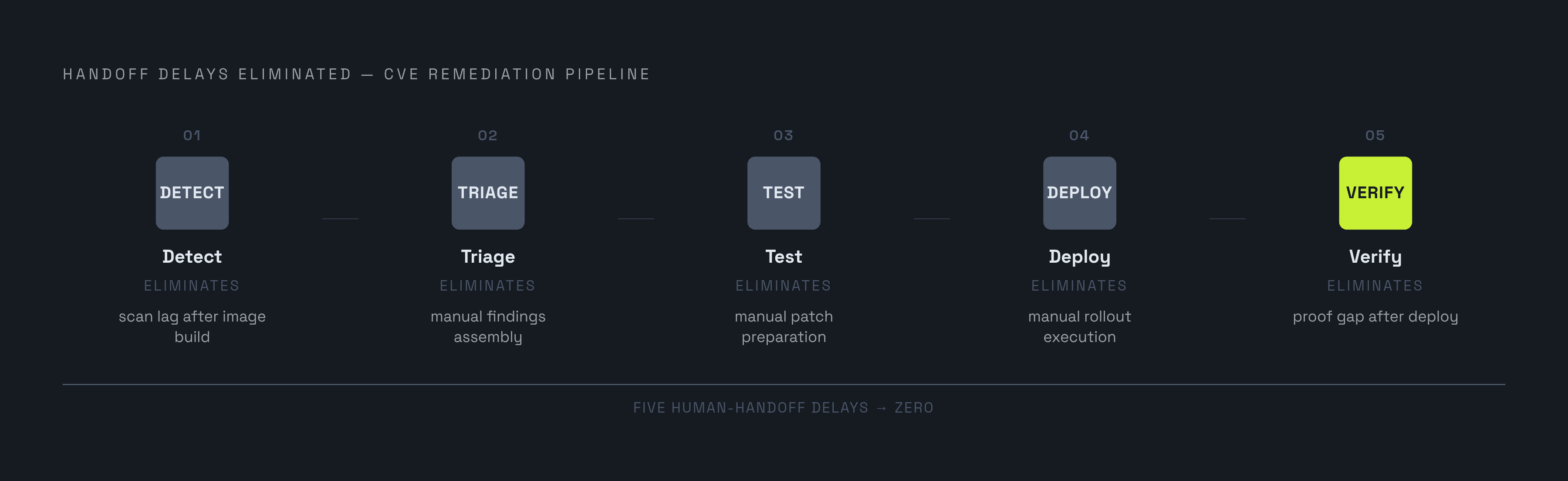
Stage 1, Detect, removes the wait between building an image and learning that it contains a disallowed vulnerability. Scanning runs directly in CI/CD right after each image build, and the pipeline fails if it finds vulnerabilities that policy does not allow. This catches the problem before the image reaches production rather than relying only on discovery after deployment. Detection is therefore part of the release path. Its output becomes the input to prioritization.
Stage 2, Triage/Prioritize, removes the manual work of assembling findings into actionable tickets. Each finding is scored using raw CVSS supplemented by EPSS, which estimates exploitation probability, and membership in KEV, the Known Exploited Vulnerabilities catalog. Together, those signals show which findings should trigger automatic remediation and which need human review. Automatically created tickets contain the CVE ID, CVSS score, EPSS score, affected asset list, and estimated patch complexity. The human applies patch policy at this stage instead of spending review time collecting those details.
CISA’s KEV catalog supplies confirmed-exploitation entries through a JSON/CSV feed. A listed CVE with an active deadline moves automatically to the top of the patch queue, but priority alone does not establish whether remediation will finish in time. The pipeline also calculates deadline slack using today’s date, the KEV deadline, the current and target images, the percentage of nodes still unpatched, and projected rotation duration under current PDB/drain limits. This connects urgency to the actual pace of replacement.
Stage 3, Test, removes the wait for someone to prepare and validate a patch manually. The patch goes to staging first, where automated smoke tests and integration or health-check tests run before production deployment is allowed. For OS and kernel changes, a health-check script confirms that the system returns and key services are running, while a failure blocks production and alerts the owning engineer. For container workloads, testing validates the patched image digest before any cluster workload references it. Staging must mirror production workload scheduling, PDB limits, and drain policies, so Porter’s on-demand preview environments can remove setup work, while that operational match remains a requirement for patch testing.
Stage 4, Deploy, removes manual execution without treating all patches as the same operation. The pipeline uses the appropriate mechanism, including a Helm chart update, an Ansible playbook, or a GitOps PR, with rollback logic built in. Helm’s --atomic flag applies the update, waits for rollout success using readiness probes, and rolls back to the previous version if the rollout fails or times out. High-risk patches first reach a small percentage of production instances as canaries, followed by a hold period and automated health monitoring. Maintenance windows, Prometheus health checks, and maximum concurrent rollout limits gate further progress.
Microsoft’s Azure Linux autosec pipeline illustrates the automated initiation of this stage. Its azurelinux-security pipeline automatically opened a PR patching Kubernetes for CVE-2026-97032, CVE-2026-78669, CVE-2026-78663, CVE-2026-78660, and CVE-2026-78659. The useful distinction is that no person had to initiate preparation of that PR. Automated preparation does not, by itself, establish that a production rollout is safe.
Stage 5, Verify, removes the gap between completing a deployment and proving that it fixed the vulnerability. A re-scan or targeted vulnerability check confirms that the CVE is no longer present. Only then does the pipeline automatically close the ticket with re-scan evidence attached and record closure time for SLA tracking. It also updates the vulnerability management system from “open” to “remediated.” That closes the audit loop instead of treating a successful deployment command as proof of remediation.
Node-level CVEs require a different remediation primitive than image-level CVEs
A vulnerable host kernel still needs a fix even after the container image has been patched. Modern Kubernetes deployments on EKS, GKE, and AKS treat worker nodes as immutable, so the default remediation is to rotate the node pool to a new image. This introduces a separate availability dependency. The platform team must track both the upstream patched kernel and its arrival in the managed-service node image. EKS-optimized Amazon Linux 2023 images, GKE Container-Optimized OS, and AKS Ubuntu and Azure Linux node images each have their own update cycles.
The appropriate deployment operation is a blue-green node-pool rotation with PDB-aware drain. A deployment agent runs the rotation, follows PodDisruptionBudgets, flags stuck drains as exceptions, and records each node it replaces. Pod disruption budgets, taints, and tolerations can slow that rotation, so the deadline calculation must account for them.
Some workloads cannot be drained in the time allowed, including stateful databases, in-progress AI training jobs, and long-running batch pipelines. For Copy Fail, the documented stop-gap is disabling the vulnerable algif_aead kernel module through /etc/modprobe.d/ and/or using a seccomp profile that denies AF_ALG socket creation. That is a compensating control with a sunset date. The exception marked “deferred” needs explicit justification and audit-trail capture. Every node rotation and every exception must have an immutable audit entry.
How can startups use the pipeline’s audit trail for SOC 2 CC7.1 and HIPAA’s 2026 risk management requirements
The pipeline’s audit trail provides compliance evidence from the work it does. For SOC 2 CC7.1, it connects vulnerability identification to action and verification. The record shows what was found, how it was prioritized, what remediation ran, and whether the vulnerability remained afterward. Because the records are made as the work runs, there is no need to piece them together afterward. The same controls that shorten exposure also document the response.
OCR confirmed in 2026 that it will expand its Risk Analysis Initiative to cover risk management. That shift requires organizations to demonstrate active remediation of identified vulnerabilities. Risk-based SLAs allow the least time to respond to high-severity issues, more time for medium-severity issues, and the most time for low-severity issues. EPSS + KEV triage and SLA-tracked closure supply evidence of that risk-based response. Records of node rotations and exceptions also show what was done at the infrastructure layer.
This is the concrete value of compliance automation for an early-stage startup. However, evidence for vulnerability management is not the same as complete SOC 2 or HIPAA readiness. People still have to decide whether there is good reason for an exception and take responsibility for accepting its risk.
Shared responsibility gaps that a pipeline inside your own cloud account closes
A pipeline can remediate only the infrastructure it controls. Shared-tenant infrastructure leaves parts of the stack, including the underlying cluster, runtime, and host kernel, outside the customer’s reach. The provider handles some vulnerabilities, but each managed service still has its own shared-responsibility boundary. So a single deployment can depend on several CVE streams and disclosure-to-patch timelines that the customer cannot change or see in detail.
Running infrastructure in the team’s own account gives the pipeline access to its VPCs, node pools, and container registries. With that access, the pipeline can use image scanning, node rotation, GitOps PR automation, and audit capture across the layers the team controls. It does not transfer the cloud provider’s responsibilities to the customer or erase managed-service boundaries. Coverage must also follow workloads across clouds when an organization uses GCP for AI/ML, AWS for regulated workloads, and Azure for enterprise integrations. Terraform, Kubernetes, and GitHub Actions provide portable primitives.
Porter is one option for deploying production-ready environments directly into a customer’s AWS, GCP, or Azure account, where node-pool rotation, cluster upgrades, and CVE patch automation can reach the required infrastructure. It handles automatic CVE patching as part of cluster management, CI/CD, and autoscaling, making it a practical alternative to assembling those operations through Terraform, Kubernetes, and GitHub Actions.
Where AI-assisted tooling fits in the pipeline and where it still requires human review
AI-assisted tooling increases pressure on detection and triage while also shortening fix preparation. The CVE program has granted OpenAI and Anthropic temporary CNA status, allowing them to assign CVEs to vulnerabilities their models discover in certain software. As machine-assisted discovery finds more vulnerabilities, defenders have more to work through. That reinforces the need to supplement a raw CVSS queue with EPSS + KEV prioritization. Finding more vulnerabilities is useful only if the remediation system can distinguish what needs action first.
AWS’s open-source reference implementation, aws-samples/gen-ai-cve-patching, uses Amazon Bedrock to process Inspector detection results and build pull request content on architecture-optimized Amazon ECS Fargate instances. NVIDIA’s AI Blueprint for Vulnerability Analysis uses NVIDIA Morpheus and Llama 3 NIM microservices to process CVE lists, SBOM files, and source repositories. Its agentic workflow builds a knowledge base, gathers vulnerability intelligence, generates tailored checklists, and assigns VEX justification statuses. These implementations accelerate preparation and analysis. Neither makes generated output self-approving.
AI-generated patch PRs and suggested remediations still enter the human-review triage stage. Their value is compressing the interval between an identified CVE and a reviewable fix from days to minutes. Tests, rollout gates, and verification are still needed after approval.