Pre-Series A SOC 2 Readiness on AWS Without a Dedicated Security Hire
Startups can pass SOC 2 audits on AWS by configuring native tools across their engineering team.
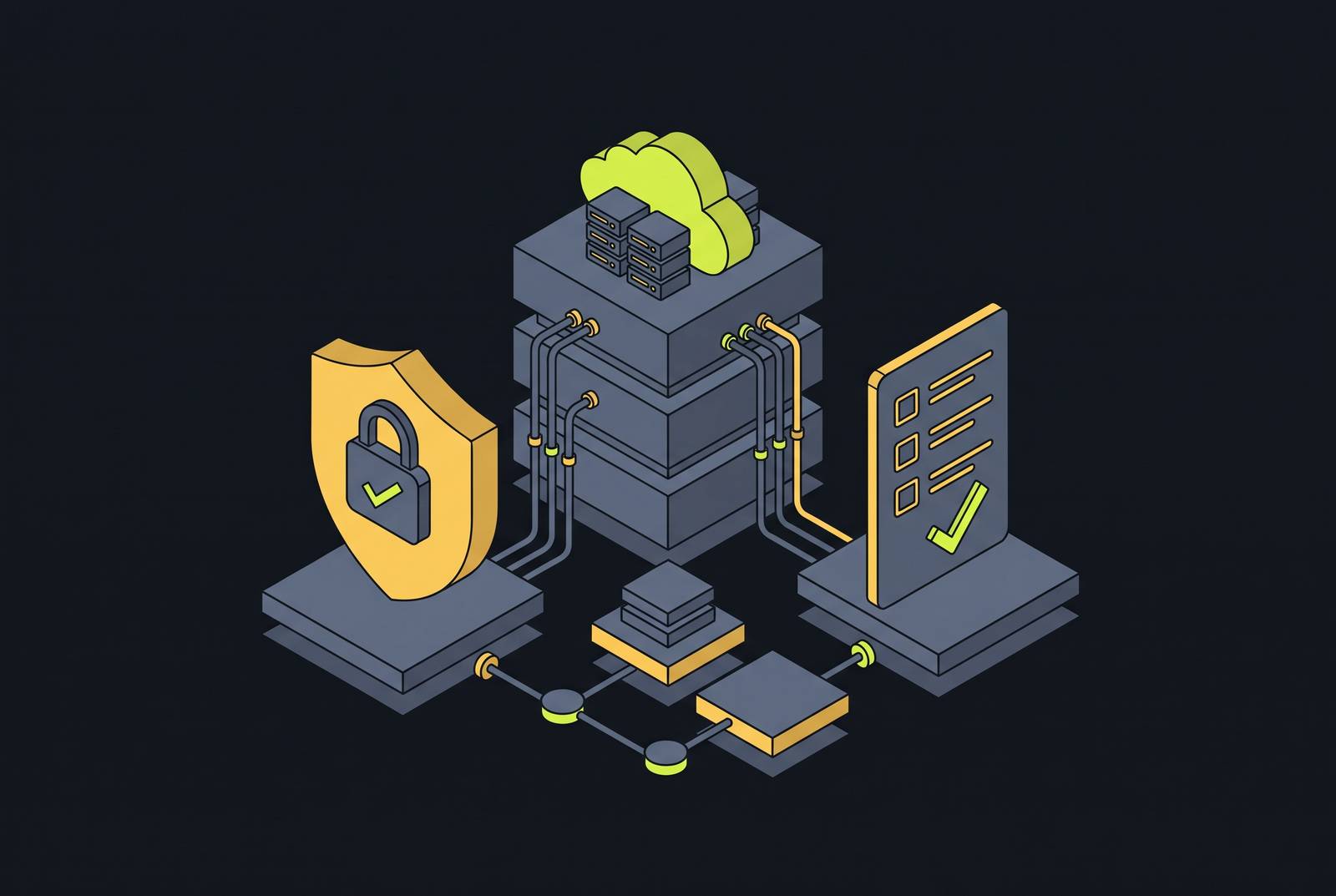
Pre-Series A startups can become SOC 2 ready on AWS without a dedicated security hire by configuring native controls, assigning responsibility across existing engineers, and collecting evidence from day one. AWS reduces the infrastructure work, but it does not make the startup compliant.
Why SOC 2 comes up before Series A, and what it actually demands of a small team
Enterprise procurement can turn SOC 2 into a binary buying requirement before a startup reaches Series A. A first enterprise deal, an investor asking for proof of controls, or an RFP requiring Type II can set the deadline. Without a report, a B2B SaaS company may be screened out before a sales conversation begins. Readiness affects revenue, though engineers do most of the work.
The report is not the same as security. A CPA firm attests to the controls inside the agreed scope, rather than building controls, writing policies, or configuring AWS. A narrowly scoped audit can therefore leave serious weaknesses outside its boundaries, including public customer data, missing root-account MFA, or former employees with production access. Passing does not erase those weaknesses. The team has to configure systems carefully even when they fall outside the easiest audit scope.
The first timing decision is Type I versus Type II. Type I assesses control design at a point in time and can serve as a bridge when a buyer accepts it. Type II tests whether controls operated effectively over an observation period, with a minimum of three months and often much longer. Enterprise buyers commonly require the latter. A tool cannot compress that period, so implementation and evidence collection have to begin before the report is urgently needed.
Scope also determines how much work the team takes on. SOC 2 has five Trust Service Criteria, with Security mandatory in every report. For most B2B SaaS startups, Security, Availability, and Confidentiality are a useful first scope because they cover the concerns enterprise buyers often raise. Processing Integrity and Privacy matter more to certain businesses, including payment processors and companies that directly control personal information. Taking on all five at once can exhaust a small team without helping it reach the first audit.
What the AWS shared responsibility model actually inherits — and what it does not
AWS’s own SOC 2 Type II coverage includes infrastructure that a startup does not have to secure itself. Physical data center security, hardware, hypervisors, and the global network sit on the AWS side of the boundary. Managed service platform security, including RDS engine patching and S3 infrastructure, also reduces the customer’s work. That is a substantial head start for engineers. It is not an attestation of how the startup uses those services.
The customer is still responsible for IAM policies, EC2 operating-system hardening, encryption choices, and network configuration. Security groups, NACLs, and VPC design do not become correct simply because they run on AWS. Application security, logging, backups, incident response, and operational procedures remain customer responsibilities too. The boundary is easy to misunderstand in practice. AWS secures the underlying infrastructure, while the startup must configure its layer correctly and prove that its controls work.
CloudTrail supplies audit logging, KMS supplies encryption controls, IAM supplies access control, and GuardDuty supplies threat detection. Engineers do not need to recreate those capabilities. Their work is to configure them, document their purpose, and retain evidence of their operation.
Before configuration begins, the team should define which systems create, process, store, or transmit customer data. Production AWS environments belong in scope, as do identity systems, production deployment pipelines, and support tools with customer-data access. Development and staging can be excluded only when they neither connect to production nor contain real customer data. Internal tools may also stay outside scope if they have no customer data or production credentials. These exclusions reduce audit burden legitimately because they follow the data boundary.
The AWS control stack a small team can own without a security hire
A two- or three-person engineering team can own the core AWS technical controls. IAM governs access, while KMS provides encryption at rest for customer data stores and an auditable key-management record. CloudTrail should run in all regions, with centralized logs in a dedicated S3 bucket protected by Object Lock. That protection stops anyone from tampering with the audit trail. These configurations provide access, encryption, and logging controls without a separate security product for each job.
AWS Config adds a continuous record of configuration state. Managed rules including iam-root-access-key-check, s3-bucket-public-read-prohibited, and encrypted-volumes catch specific control failures so engineers do not have to check the settings by hand. GuardDuty provides continuous threat detection, with findings feeding incident response workflows. Security Hub brings findings into a control-by-control view. Together, these services let engineers identify deviations and produce evidence without assigning someone to watch dashboards all day.
Infrastructure as Code makes the intended configuration reviewable. AWS CDK or Terraform can keep IAM roles, encryption settings, and network policies in version control, where changes have dated, attributed commits. Changes that have been reviewed and approved then serve as change-management evidence. AWS Config supplies the check against configuration drift. The code records what the team intended, while monitoring helps reveal where the running environment departs from it.
The deployment pipeline needs the same discipline because it can change production. The practical setup separates development, staging, and production into AWS accounts, with centralized ECR repositories in a shared-services account. Tightly scoped GitHub Actions OIDC roles and cross-account pull permissions avoid long-lived pipeline credentials in environment variables. Build-stage container scanning supports vulnerability management. Promoting the same image by retagging rather than rebuilding preserves the link between what ran in staging and what reached production.
There is one tooling constraint for new setups. AWS’s documentation states that Audit Manager closed to new customers on 30 April 2026. Teams starting now should build their continuous compliance pipeline from AWS Config conformance packs, Security Hub control exports, and CloudTrail Lake queries. The new collection route carries the same responsibility to preserve proof.
Assigning ownership across existing engineers when there is no security role
A failed-control alert needs a person behind it. Someone must receive it, decide what should change, make or assign the fix, and retain the evidence. Someone must also answer the auditor’s questions about that work. Even when a control is configured correctly, the team needs someone to monitor it to show that it worked throughout Type II. The team needs an internal project owner, even when it does not need a full-time CISO.
An engineering owner with a do-it-yourself stack keeps those jobs inside the team. Native alerts, scripts, a control spreadsheet, and stored screenshots can support the process, but the same engineer may become the decision-maker, fixer, and evidence clerk. A fractional security lead helps the team judge scope, policies, and what to discuss with the auditor, while engineers still make the fixes. Buying expertise does not itself supply continuous monitoring or evidence collection.
A managed service can run part of the technical layer, but it introduces a handoff between whoever detects a problem and whoever owns the affected system. A compliance platform with expert support takes a different role. It connects cloud, HR, and work applications, runs checks, routes failures, and files evidence against controls. The team still owns decisions only it can make. The useful comparison is therefore who detects, decides, fixes, and records, rather than which option promises the least involvement.
Policies need named owners as well as technical controls. The expected documents cover Acceptable Use, Access Control, Change Management, Data Classification, Data Retention and Disposal, Incident Response, Business Continuity, Vendor Management, and Security Awareness Training. They need version control, employee acknowledgments, and a record of a review each year. A shared folder is not an operating policy. Type II tests whether people followed the policy as well as whether someone wrote it.
When former employees keep production credentials, that is an access-control failure, which by itself does not show that a startup needed a security department. Automating offboarding through IAM Identity Center addresses that failure directly. The named owner remains responsible for responding when the control fails and preserving proof of the correction.
Why evidence collection has to start on day one, not the week before the audit
Type I can establish that the control is designed, while Type II requires evidence that backups ran and failures were addressed during the observation period. A screenshot from the final week cannot show that a control worked for months. Evidence collection therefore belongs in the initial setup.
Manual collection makes a longer observation period more expensive in engineering time. Screenshots, log exports, and spreadsheet updates keep returning as work, even when the underlying controls have not changed. Automated collection from Config, CloudTrail, and Security Hub reduces that recurring burden. Operational controls still need a separate record. Access reviews, employee acknowledgments, and vendor assessments must be captured separately from AWS logs by a compliance platform or the designated engineer.
Readiness work should also precede the CPA engagement. A security readiness partner or compliance platform with expert support can help build the program before an auditor tests it. The CPA firm serves a different purpose. Arriving with paper-only controls can force the team to pause an audit and repair gaps while paying for the engagement. Separating implementation from attestation gives the auditor functioning controls to assess.
The budget extends beyond the auditor’s fee. A platform or readiness partner, penetration testing, and internal engineering time all contribute to first-year costs. Automation does the most to cut the time engineers spend collecting the same kinds of proof over and over, while other compliance costs remain. It also changes what the team has at the end of the observation period. Instead of a fresh collection of screenshots, the team can present timestamped control records, documented human actions, and evidence of how failures were resolved.
What "SOC 2 ready" actually means for a pre-Series A team running on AWS
To be ready, the team needs controls that work all the time and hold up under review even outside a convenient audit boundary. A clean attestation is narrower than that claim. The team’s security posture should not depend on excluding a vulnerable system from an auditor’s review. Legitimate scope limits distinguish customer-data systems from unrelated tools. They do not justify leaving critical production controls unowned.
The practical end state begins with a documented data boundary and a configured AWS environment. IAM Identity Center with MFA governs access, KMS protects customer data stores, and CloudTrail retains protected audit logs. Config, GuardDuty, and Security Hub provide drift detection, threat findings, and control records. Those settings belong in version-controlled infrastructure code. Policies then have named owners and employee acknowledgments, while every control requiring human action has someone responsible for performing and recording it.
Where that infrastructure runs also affects who owns the evidence. In the startup’s own AWS account, CloudTrail logs, Config records, and Security Hub findings belong to that account rather than depending on a shared platform’s export capabilities. Customer-owned infrastructure is therefore a legitimate selection criterion. A platform can manage infrastructure in the customer’s account without requiring the team to maintain every operational layer itself.
Timing follows from that operating state. Type I can unblock a deal in weeks when the buyer accepts it, while Type II requires the observation period to be lived. With automated evidence collection, the team can keep building its product as usual during that period. Starting at the first signal of enterprise interest gives the team more room than waiting for procurement to stop a deal.
This is also why “one-click compliance” is the wrong promise. The AWS work described here establishes a foundation on which the team must build to meet HIPAA compliance and future scope-specific requirements. That foundation becomes the security posture the company takes into Series A, enterprise contracts, and eventually HIPAA or government cloud security compliance scopes. When the team starts with infrastructure it owns, named control owners, and automated evidence, it can meet later requirements by adding to a program that already works without starting fresh engineering projects.